Website: https://lernu.net/instruado
Multilingualism Accelerator set out to make early language learning more approachable by giving pupils a first experience that is structured, regular and easy to grasp. The project used Esperanto as a model language and built classroom ready resources around it.
The main objective was to help children become multilingual more quickly and to build confidence in their language learning abilities. At the same time, the project aimed to raise language awareness and support motivation and self esteem throughout the learning process.
To make the concept workable in everyday school settings, the partnership developed a teacher portal and a complete set of teaching materials. A key design decision was that language teachers could deliver the course without prior knowledge of Esperanto. Teachers were able to learn in parallel with their pupils, supported by clear explanations and links embedded in the materials.
The course was piloted in three schools and led by five teachers. Forty students started the course and thirty completed it. Evaluation combined classroom observation with narrative interviews, surveys and tests.
Results and outputs
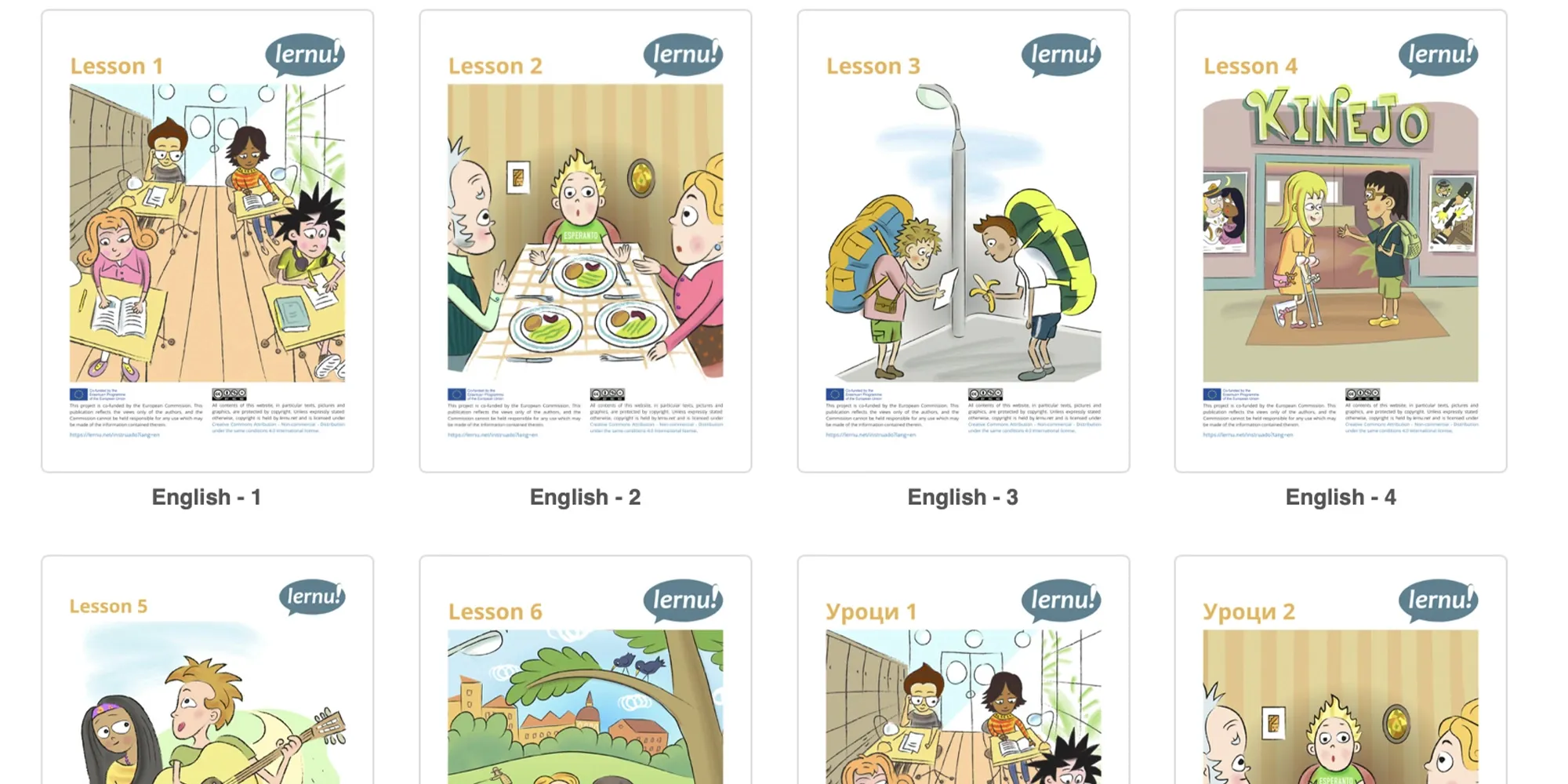
The project resulted in a structured course for classroom use, designed as 60 hours in 30 learning blocks. The course is divided into six lessons and built around the 300 most frequent morphemes.
Each lesson includes step by step teaching guidance, ready to print exercises with illustrations, direct links to grammar explanations, computer based exercises for pupils and supporting audio materials. All resources are hosted on the Multilingualism Accelerator portal, which is currently available in ten languages: Bulgarian, Croatian, German, English, Esperanto, Portuguese, Russian, Spanish, Slovak and Slovenian.
Alongside the classroom materials, the partnership also created online tutorials for teachers. These were produced in Esperanto, with subtitles in all project languages, and introduce the overall approach, basic Esperanto and practical guidance on how to use the didactic materials.
Our role
Studio GAUS GmbH was involved in the project from the concept development phase onward and contributed to shaping the overall approach. We co-created the project idea together with the partner organisations and supported coordination processes throughout the project. We developed and operated the multilingual project portal, including the underlying content structures and an integrated translation workflow that allowed language versions to be created and maintained directly within the platform. In addition, we designed visual elements and illustrations and prepared the downloadable teaching materials used in the classroom.
Project partners
- Izvori d.o.o. (Croatia)
- Inter-kulturo d.o.o. (Slovenia)
- Univerza v Mariboru (Slovenia)
- Studio GAUS GmbH (Germany)
- Sredno uchilishte Hristo Botev (Bulgaria)
- Osnovna škola Retkovec (Croatia)
- OŠ Rudolfa Maistra, Šentilj (Slovenia)
- Edukácia@Internet (Slovakia)
- Syddansk Universitet (Denmark)
To support collaboration across the multi-country partnership, we used regular email exchange and Skype conferences, with shared documents and content stored in a common online repository. We also supported four transnational meetings that enabled coordination and hands-on work in smaller groups.
Some of the most valuable insights came directly from the classroom. During the pilot phase, pupils responded particularly well to active formats such as songs, games, sketches, card games and computer based exercises. They found tasks focused on memorising words, filling in texts and translation more challenging.
The testing phase also led to unexpected moments of connection. One project update notes that teachers in Šentilj initiated reciprocal school visits with Zagreb, where pupils spent a day together singing, sharing meals and going on an excursion.
In terms of outreach, dissemination combined partner websites, social media, leaflets and presentations at public events. The project was also mentioned in media outlets such as Good Morning Croatia on HRT 1 and Glas Hrvatske on radio.