Website: https://media.eduskills.plus
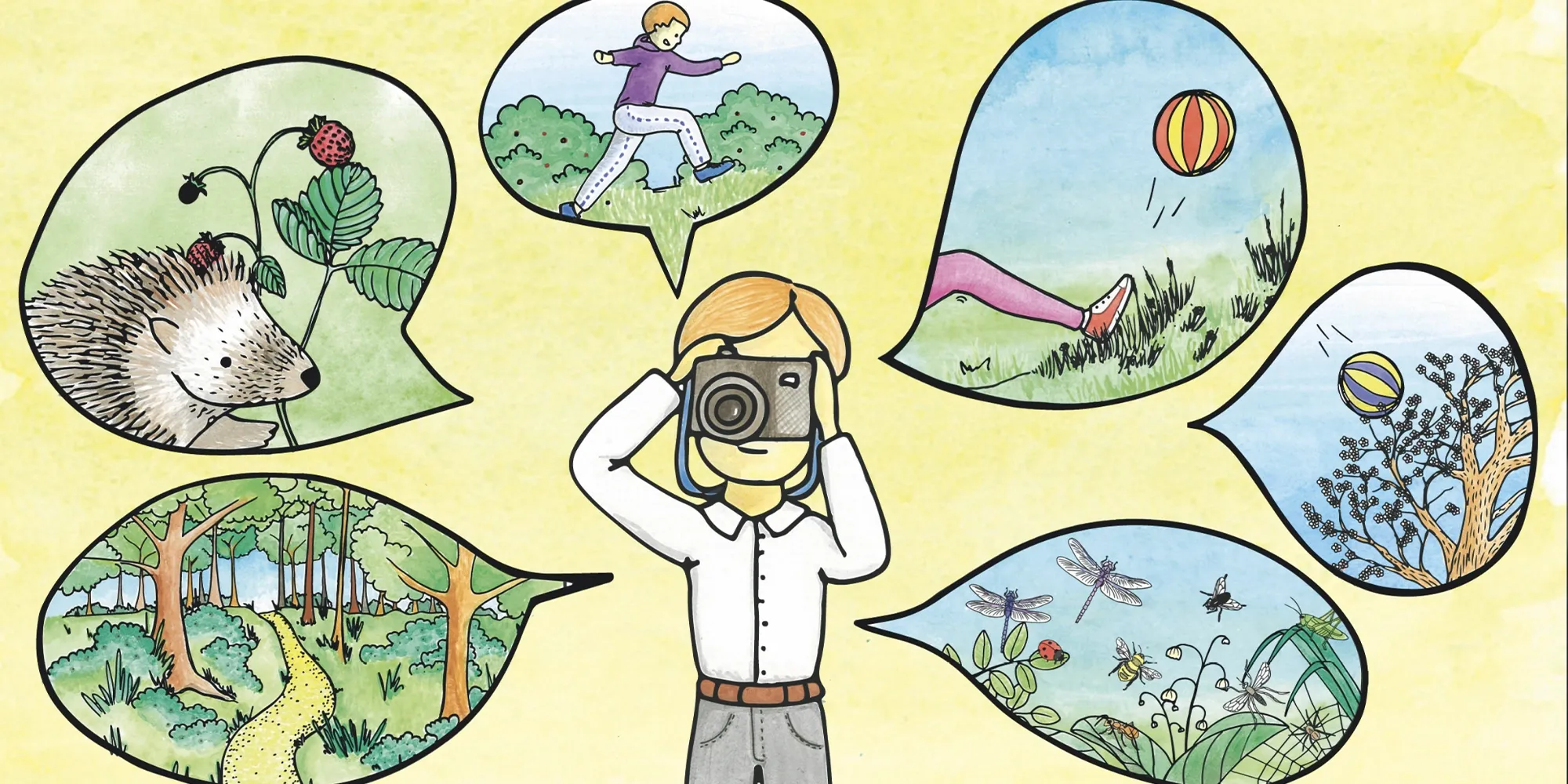
Media literacy in early childhood can be addressed through visual practices that do not rely on written language. EduSkills+ Media focused on photography as an entry point for early media education and brought together activities, tools and documented experiences for use in kindergarten settings.
The project addressed foundational aspects of media education in early childhood. It explored ways to support more active and reflective engagement with media, using visual literacy as a central component. Photography served as a core medium through which children explored, created and reflected on images in everyday contexts.
The primary target group consisted of kindergarten staff. The materials were designed for use in everyday pedagogical practice and were complemented by background information and guidance. Parents were included as an additional group in relation to children’s media habits. Activities were tested with children in partner kindergartens during the project period.
Results and outputs
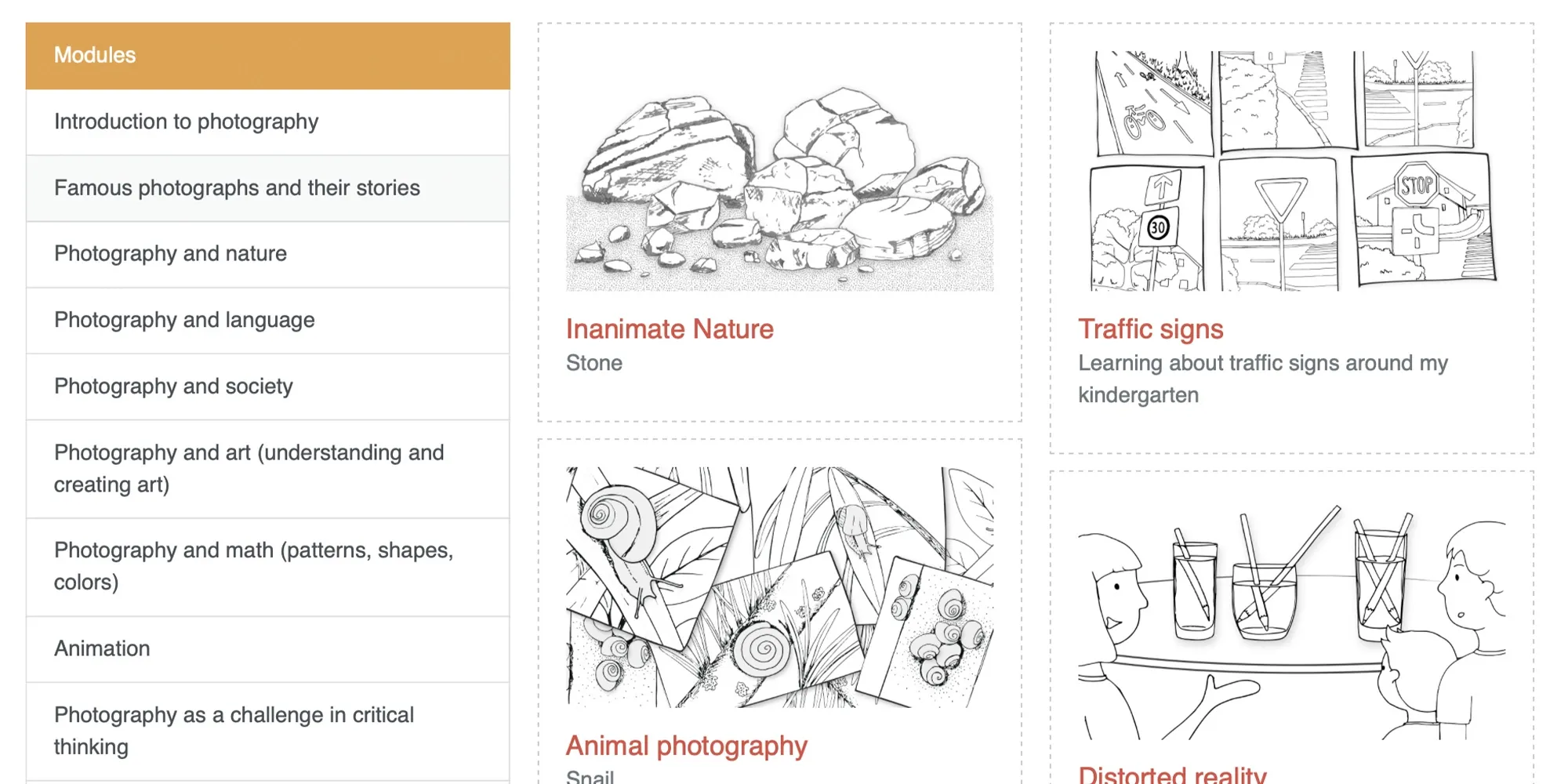
One of the project outputs was the EduSkills+ Media portal, available in six languages: Croatian, English, Estonian, German, Romanian and Slovene. The platform brings together 51 activities for use in kindergarten settings, accompanied by more than 300 illustrated, downloadable PDF files. Additional materials include introductory guidance, a tools section, and resources for parents such as “Kids and New Media” as well as a poster and flyer on children’s use of digital devices.
The partnership also produced 20 short experience videos and a photo library with 467 free, downloadable photographs to support lesson preparation and classroom work. All materials are published under the Creative Commons Attribution, Non-commercial, Distribution under the same conditions 4.0 International licence.
An additional Romanian language version was added to make the materials accessible for use in Romania.
Our role
Studio GAUS GmbH took part in the development of EduSkills+ Media from the concept development and application phase onward.
We developed and implemented the EduSkills+ Media platform, including its overall architecture, design, and content structures. This included establishing workflows for multilingual content management and automated PDF generation to support the integration of additional language versions.
Throughout the project, we accompanied implementation and content integration in close cooperation with the project partners, ensuring that pedagogical concepts and platform structures evolved in parallel.
Project partners
- Inter-kulturo d.o.o. (Slovenia)
- Studio GAUS GmbH (Germany)
- Vrtec Tezno Maribor (Slovenia)
- Djecji vrtic Pcelica (Croatia)
- International Kindergarten OÜ (Estonia)
- Zavod za fotografsko terapijo (Slovenia)
Collaboration combined face to face and online partner meetings, with communication supported through a project group email, Skype and Zoom. The partnership held two in person meetings and four online meetings, reflecting how the workflow was adapted during the pandemic.
Visibility and impact
In kindergartens, the approach was tested in real settings over two school years and partly into autumn 2021. In total, more than 180 children took part directly, trying out activities that linked photography with everyday learning areas such as art, language and mathematics. Observations from the testing phase showed children’s engagement with devices and with different stages of photographic work during the activities.
The project also paid attention to inclusion. Two children with educational difficulties were involved, supported by input from Zavod za fotografsko terapijo. The portal reflects this experience by including guidance on photography activities for children with special needs.
Dissemination activities reached educators through presentations and workshops, involving more than 1,300 participants. After the portal went online, 115 educators provided feedback, which informed further reflection on the use of the materials in practice.
Parents were involved from an early stage. Information was shared at parent meetings, and families were invited to exhibitions where children’s photographs were presented. The “Kids and new media” guidance was widely distributed, with around 10,000 copies circulated. In surveys, 88 percent of teachers said the materials would help them raise parents’ awareness of media education at home. In Croatia, at least ten exhibitions of children’s photographs were held in public libraries across the wider Zagreb region. Broader awareness activities also included contributions in print media, radio and television.
The portal provides materials for use in early childhood settings that combine photography with everyday learning activities. The activities are structured for integration into regular kindergarten routines and support shared reflection on media use through practical exercises.