Website: https://eduskills.plus
Globalisation is not a distant concept for young people. It appears in classrooms through migration, rapid cultural change and the ways technology reshapes how we communicate and understand each other. EduSkills+ Reflect 2 was created in response to a risk many educators recognise: when schools lack the tools to reflect on these developments, fear and exclusion can take hold, and young people may become more vulnerable to radical worldviews.
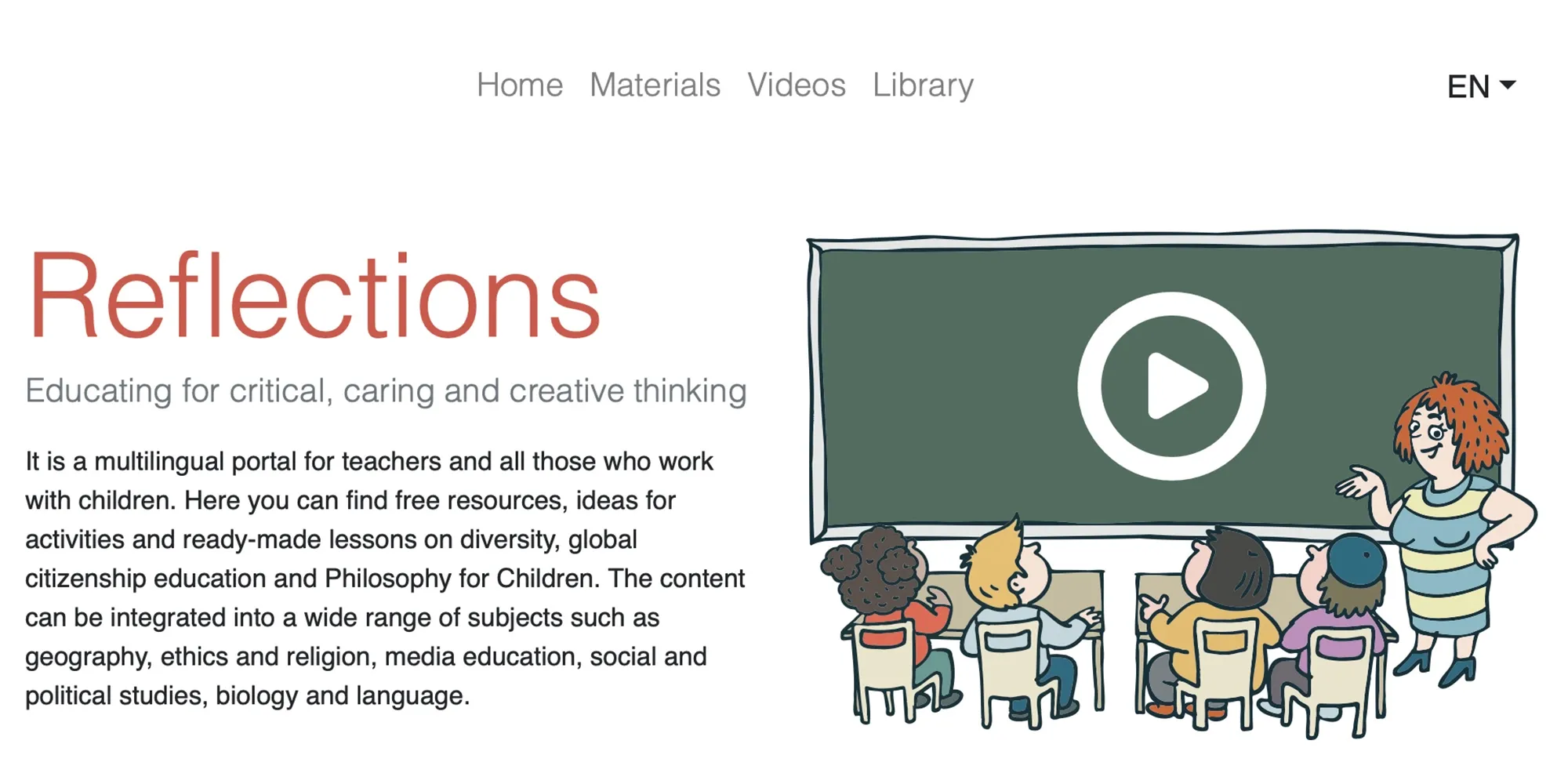
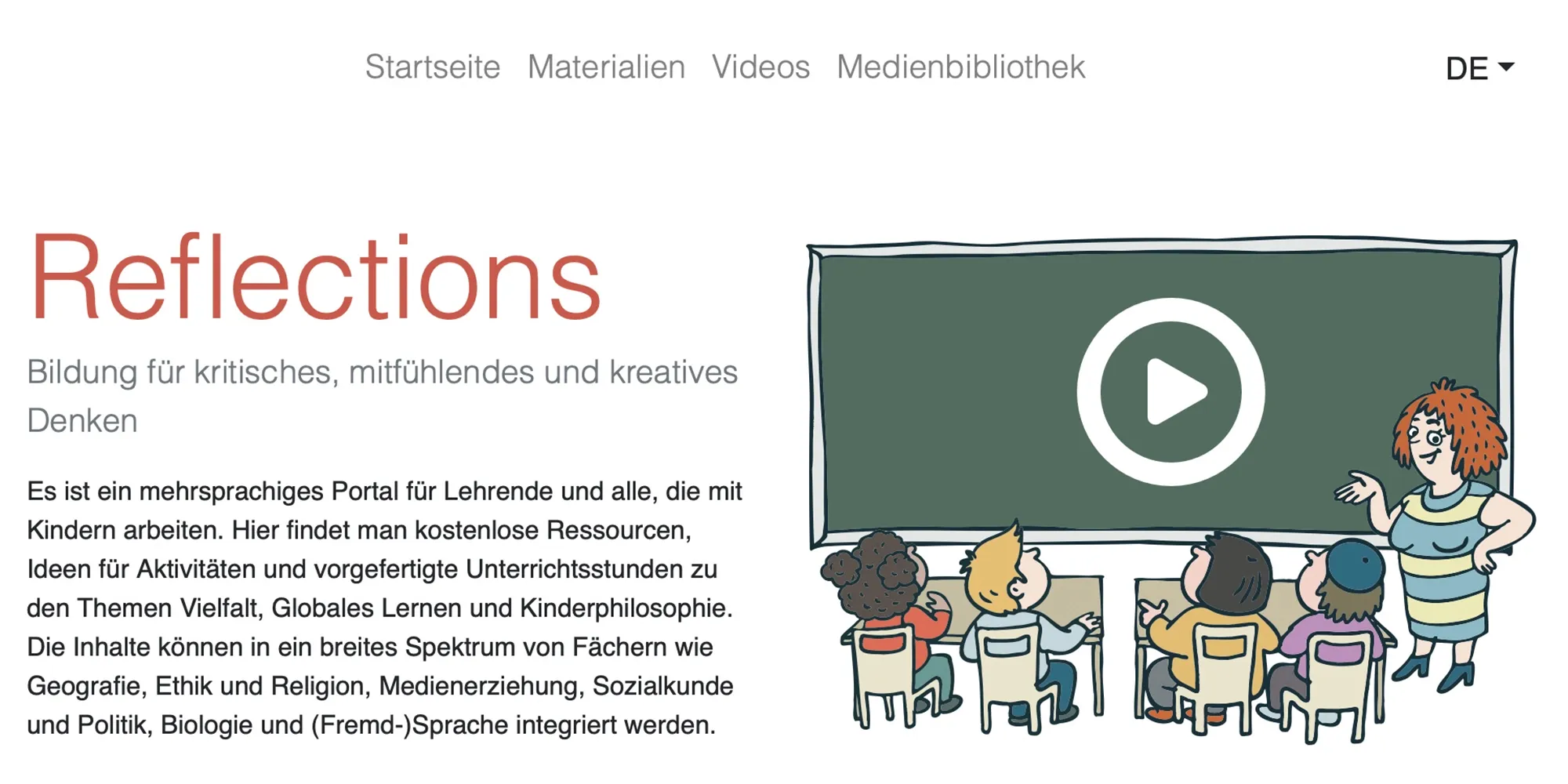
At the centre of the project is EduSkills+, a multilingual online platform dedicated to cosmopolitan educational strategies. It offers teachers ready to use learning modules, a multilingual media library and video tutorials that support classroom work with children and young people. The platform and its materials are available in English, German, Italian, Polish, Slovak and Slovene.
EduSkills+ Reflect 2 built on the existing base of classroom resources already available through EduSkills+. We expanded this offer with additional modules and supporting tools, enabling more teachers to address diversity and global issues and to use philosophical inquiry in the classroom with confidence.
Results and outputs
EduSkills+ Reflect 2 focused on expanding the platform with new teaching content and on strengthening the digital environment that brings everything together. At the start of the project, EduSkills+ already offered 12 modules with 77 detailed lesson plans and 1,101 downloadable PDF documents across all language versions. The project’s main result was an updated and enlarged portal integrating new modules and video materials.
Eight new teaching modules were developed and published to broaden the scope of the platform, with around half based on the Philosophy for Children approach. These were complemented by short video tutorials to support teachers in using the materials confidently in the classroom.
A key element behind this work was the multilingual production workflow. Content was prepared within a dedicated translation area on the portal, allowing partners to collaborate on translations and review them directly online. This process included testing cycles and technical checks before materials were released.
Our role
Studio GAUS GmbH was involved in EduSkills+ Reflect 2 from the application phase and worked on the further development of EduSkills+ as a shared platform for cosmopolitan education in school contexts.
We worked closely with the project partners to integrate new teaching modules and video materials into the existing platform and to expand the online environment in a coherent and sustainable way. This included preparing and publishing the project results within the established EduSkills+ structure and aligning new content with existing workflows.
Throughout the project, we accompanied planning, refinement, and publication processes so that pedagogical concepts and digital structures evolved together. We also supported the preparation of downloadable materials and internal guidelines, helping ensure that the results remain accessible, reusable, and firmly embedded in the platform beyond the project period.
Project partners
- Studio GAUS GmbH (Deutschland)
- Edukácia@Internet (Slowakei)
- Università Degli Studi di Napoli Federico II (Italien)
- Österreichische Gesellschaft für Kinderphilosophie (Österreich)
- Leibniz-Institut für Bildungsmedien | Georg-Eckert-Institut (Deutschland)
- Südwind Verein für Entwicklungspolitik und globale Gerechtigkeit (Österreich)
- Fundacja "Krzyzowa" dla Porozumienia Europejskiego (Polen)
- Inter-kulturo, d.o.o. (Slowenien)
The partnership combined in person milestones with structured online collaboration. Online tools such as shared cloud folders and documented meetings were used throughout, alongside five transnational meetings held across the project timeline. These meetings took place in partner countries including Germany, Austria, Poland and Italy.
Visibility and impact
A distinctive feature of EduSkills+ Reflect 2 was its emphasis on practical uptake, not only on producing content. The video tutorials were produced as short formats of around five to ten minutes, reflecting teachers’ preference for clear, time efficient guidance. They were produced with subtitles in all partner languages, supporting use across different national and educational contexts.